Cybersecurity for Small Businesses: What Actually Matters

Small business cybersecurity does not need to be complicated or expensive to be effective.
The challenge is not a lack of security options. The challenge is knowing which ones actually matter for your business.
Most cybersecurity advice either oversimplifies the problem or overwhelms business owners with technical details that do not translate into actionable decisions.
The reality is simpler: a few fundamental protections, implemented correctly, provide most of the security value small businesses need.
Start With What Matters Most
Not all cybersecurity measures are created equal.
Multi-factor authentication stands out as the single most effective protection small businesses can implement. It prevents most credential-based attacks, which represent the majority of successful breaches against small businesses.
When someone tries to access your systems with stolen or guessed passwords, multi-factor authentication requires a second form of verification. This simple step blocks most unauthorized access attempts.
The second priority is password management. Weak or reused passwords remain one of the most common ways businesses are compromised. A business-grade password manager ensures every account has a unique, strong password without creating complexity for your team.
These two protections address the most common attack methods and provide immediate security improvement.

Employee Training That Actually Works
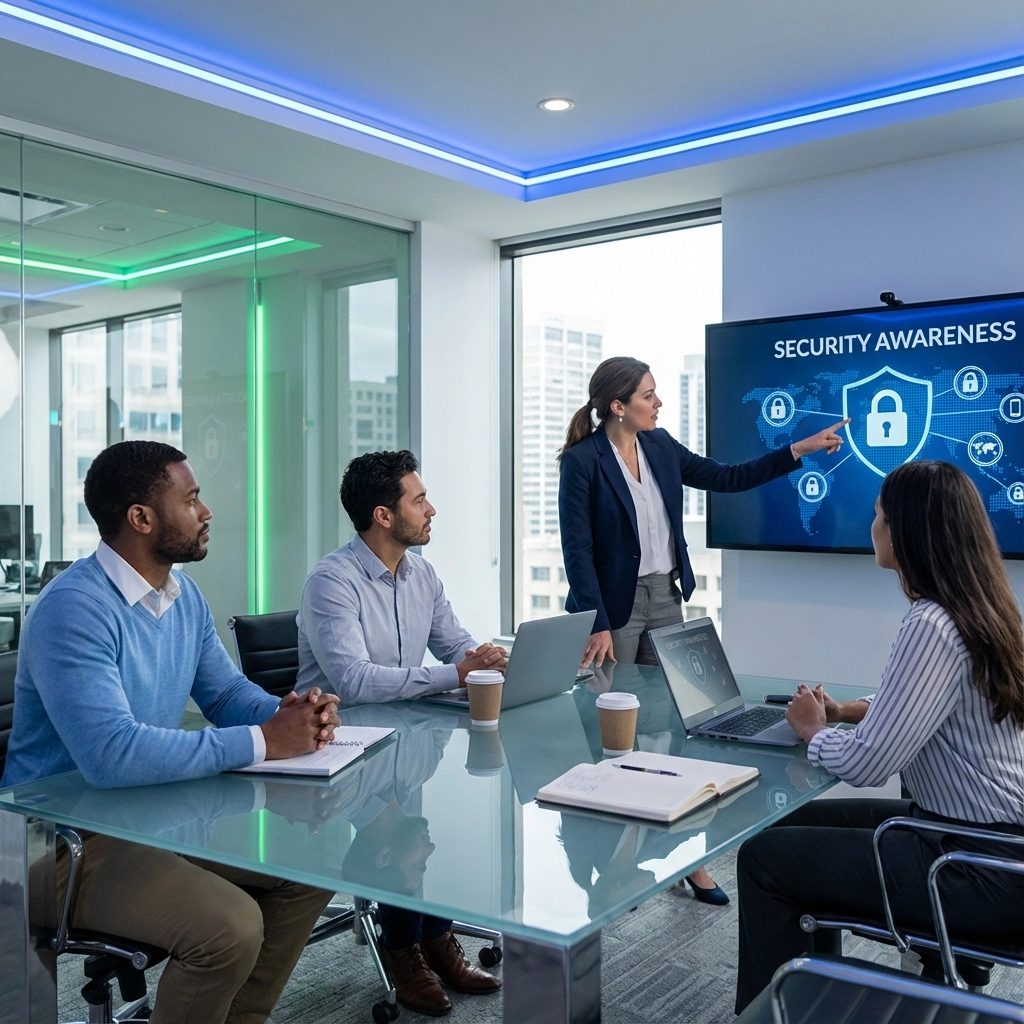
Your employees are not your biggest security risk. They are your most important security asset when properly informed.
Effective security training focuses on recognition, not fear.
Teach your team to recognize suspicious emails, unusual requests for information, and unexpected system behavior. Most successful attacks rely on employees who are unaware of what to watch for.
Training should be practical and relevant to daily work. Generic cybersecurity presentations are less effective than specific examples related to your industry and business operations.
Regular, brief updates work better than annual training sessions. Security threats evolve constantly, and awareness needs to stay current.
Protecting Your Technology
Every device that accesses business data needs basic protection.
Modern endpoint security goes beyond traditional antivirus software. It includes automatic updates, device encryption, and monitoring for unusual activity.
For businesses with remote workers, a virtual private network ensures secure connections to company systems. This protection is essential when employees work from home, coffee shops, or other locations outside your office.
Network security starts with changing default passwords on all equipment and ensuring wireless networks use current encryption standards. These steps prevent easy unauthorized access to your systems.
Data Protection Through Backup
Backup solutions protect against both cyber attacks and operational failures.
Ransomware attacks can encrypt your business data, making it inaccessible until you pay a ransom. Even sophisticated security measures cannot prevent every attack, which makes reliable backup essential.
Effective backup strategies include multiple locations, regular testing, and offline copies that cannot be accessed by attackers. Cloud-based backup services often provide these capabilities without requiring additional hardware or technical expertise.
The goal is not just to create backups, but to ensure you can restore operations quickly when needed. Regular testing verifies that your backup system works when it matters most.
Risk Assessment Made Simple
Understanding your specific risks allows you to focus protection where it matters most for your business.
Start by identifying your most important business data. Customer information, financial records, and operational systems typically represent the highest value targets for attackers.
Consider who has access to sensitive information and how they connect to your systems. Remote access, cloud services, and third-party vendors all create potential entry points that need appropriate protection.
Document how information flows through your business. This visibility helps identify where additional protection might be needed and ensures nothing important is overlooked.
As we discussed in our recent post about the hidden cost of "it's working fine" in business IT, many technology problems develop gradually before becoming visible. Security risks follow the same pattern.

Implementation Without Overwhelm
The most effective approach implements security measures in stages based on impact and difficulty.
Phase one focuses on immediate actions that provide significant protection: enabling multi-factor authentication, deploying a password manager, and conducting an initial risk assessment. These steps can typically be completed within 30 days.
Phase two addresses endpoint protection, email security, and backup systems. These implementations often take several months but provide substantial additional protection.
Phase three includes advanced monitoring, incident response planning, and specialized protections based on your specific industry or risk profile. These capabilities can be added over time as your security foundation matures.
This staged approach prevents security initiatives from becoming overwhelming while ensuring critical protections are in place quickly.
Budget Considerations
Effective small business cybersecurity does not require enormous investment.
Many essential protections are available as affordable monthly services that scale with business size. This approach spreads costs over time and often includes ongoing updates and support.
The cost of basic security measures is typically far less than the cost of recovering from a successful attack. Downtime, data recovery, customer notification, and reputation management create expenses that dwarf the investment in prevention.
Consider security spending as operational insurance rather than optional technology expense. The goal is predictable monthly investment that prevents unpredictable crisis costs.
Vendor and Third-Party Risk
Small businesses increasingly rely on cloud services, contractors, and vendors who access company systems or data.
Each connection represents a potential security risk that needs appropriate management. This includes understanding what data third parties access, how they protect it, and what happens if their security fails.
Vendor agreements should include clear security requirements and incident notification procedures. You need to know if a breach affects your business data, even if the breach occurs at another organization.
Regular review of third-party access ensures only necessary connections remain active and that security requirements stay current.

When to Seek Professional Help
Many small businesses can implement basic cybersecurity measures independently, but some situations benefit from professional expertise.
Complex regulatory requirements, sophisticated threat environments, or rapid business growth often create security needs that exceed internal capabilities.
Professional IT security services can provide ongoing monitoring, incident response, and specialized expertise without requiring internal staff expansion.
The decision often comes down to risk tolerance and internal capacity rather than business size. Some small businesses need advanced protection due to their industry or data sensitivity, while others can succeed with basic measures properly implemented.
Making Security Sustainable
Effective cybersecurity requires ongoing attention, not one-time implementation.
Threats evolve constantly, and security measures need regular updates to remain effective. This includes software updates, policy reviews, and training refreshers.
Build security considerations into regular business operations rather than treating them as separate projects. This approach ensures security measures stay current and effective over time.
Document your security decisions and procedures. This documentation helps maintain consistency as your team grows and ensures important protections do not get overlooked during busy periods.
Moving Forward
Small business cybersecurity success comes from focusing on fundamentals rather than trying to implement every available protection.
Multi-factor authentication, strong password management, employee awareness, reliable backup, and basic endpoint protection provide the foundation most small businesses need.
Additional protections can be added over time based on specific business needs and risk tolerance.
The goal is not perfect security, which does not exist. The goal is reasonable protection that allows your business to operate confidently while managing cyber risks appropriately.
Ready to assess your current cybersecurity posture and identify the most important next steps for your business? Vertex Tech Management helps small and midsize businesses implement practical, effective security measures that fit real-world operations and budgets.
Comments