Why Antivirus Alone Is Not Enough Anymore

For decades, antivirus software was the go-to solution for business cybersecurity. Install it, update it, and trust it to keep your systems safe. That approach worked when threats were simpler and more predictable.
But the cybersecurity landscape has fundamentally changed. Today's attackers use sophisticated methods that traditional antivirus simply cannot detect or stop. Understanding these limitations is not about creating fear: it's about making informed decisions to protect your business effectively.
What Antivirus Was Built to Handle
Traditional antivirus software was designed for a different era of cyber threats. It works by comparing files against a database of known malware signatures, much like checking fingerprints against a criminal database.
This approach was effective when:
Malware was primarily file-based
Threats spread through infected disks and email attachments
New variants were created slowly
Most attacks followed predictable patterns
For many years, this signature-based detection provided solid protection against the majority of threats businesses faced.

How Modern Threats Have Evolved
Today's cybercriminals operate differently. They use sophisticated techniques specifically designed to bypass traditional security measures.
Social engineering attacks target people, not technology. A convincing phishing email doesn't need to contain malware: it just needs to trick someone into sharing login credentials or transferring money.
Credential-based attacks use legitimate login information obtained through data breaches or password theft. When an attacker uses valid credentials, antivirus sees nothing suspicious about their access.
Fileless attacks operate entirely in system memory, leaving no files for antivirus to scan. These attacks use legitimate system tools and processes to achieve malicious goals.
Supply chain compromises involve trusted software that has been secretly modified by attackers. Since the software appears legitimate, antivirus does not flag it as suspicious.
The Specific Gaps in Antivirus Protection
Understanding where antivirus falls short helps explain why additional security measures are necessary.
Human-Targeted Attacks
Antivirus cannot distinguish between a legitimate email from your bank and a sophisticated phishing attempt. Both may look identical from a technical perspective, but one is designed to steal your information.
Similarly, antivirus cannot prevent employees from being manipulated into revealing passwords, approving fraudulent transactions, or downloading seemingly legitimate software that contains hidden threats.
Behavioral Blind Spots
If an attacker gains legitimate access to your systems and begins copying sensitive files, antivirus will not flag this as suspicious behavior. The file copying activity appears routine and authorized.
The same applies when employees transfer company data to personal devices or cloud storage. Without context about data sensitivity and user permissions, antivirus cannot identify inappropriate data movement.
Advanced Evasion Techniques
Modern attackers use methods specifically designed to avoid detection:
Lateral movement involves using compromised credentials to access additional systems within your network
Privilege escalation exploits system vulnerabilities to gain higher-level access
Encrypted communications hide malicious commands within seemingly normal network traffic
These techniques exploit the trust relationships between systems and users that antivirus cannot evaluate.

Limited Visibility and Response
Traditional antivirus provides minimal information about system activities, user behaviors, and network traffic. When an incident occurs, security teams lack the detailed telemetry needed to understand what happened, how the attack progressed, and which systems may be compromised.
This limited visibility makes it difficult to contain threats quickly or prevent similar attacks in the future.
Why Next-Generation Antivirus Still Is Not Enough
Recognizing the limitations of traditional antivirus, security vendors have developed next-generation antivirus (NGAV) solutions. These tools use machine learning and behavioral analysis to detect previously unknown threats and suspicious activities.
While NGAV represents a significant improvement, it still has important limitations:
Endpoint focus only - NGAV protects individual devices but provides limited visibility into network traffic, cloud applications, or communication between systems.
Resource intensive - Advanced detection capabilities require significant computing power, which can impact system performance.
Complexity - NGAV tools often require specialized expertise to configure, monitor, and respond to alerts effectively.
Response limitations - Detection is only valuable if it leads to effective response. Many NGAV solutions identify threats but require additional tools or manual intervention for containment and remediation.
As one industry report noted, 45% of organizations now rank ransomware as their top cyber risk, demonstrating that even advanced endpoint protection alone is insufficient against today's multi-vector attacks.
What Modern Security Actually Looks Like
Effective cybersecurity today requires multiple layers of protection working together. This approach, often called "defense in depth," ensures that if one layer fails, others can still provide protection.
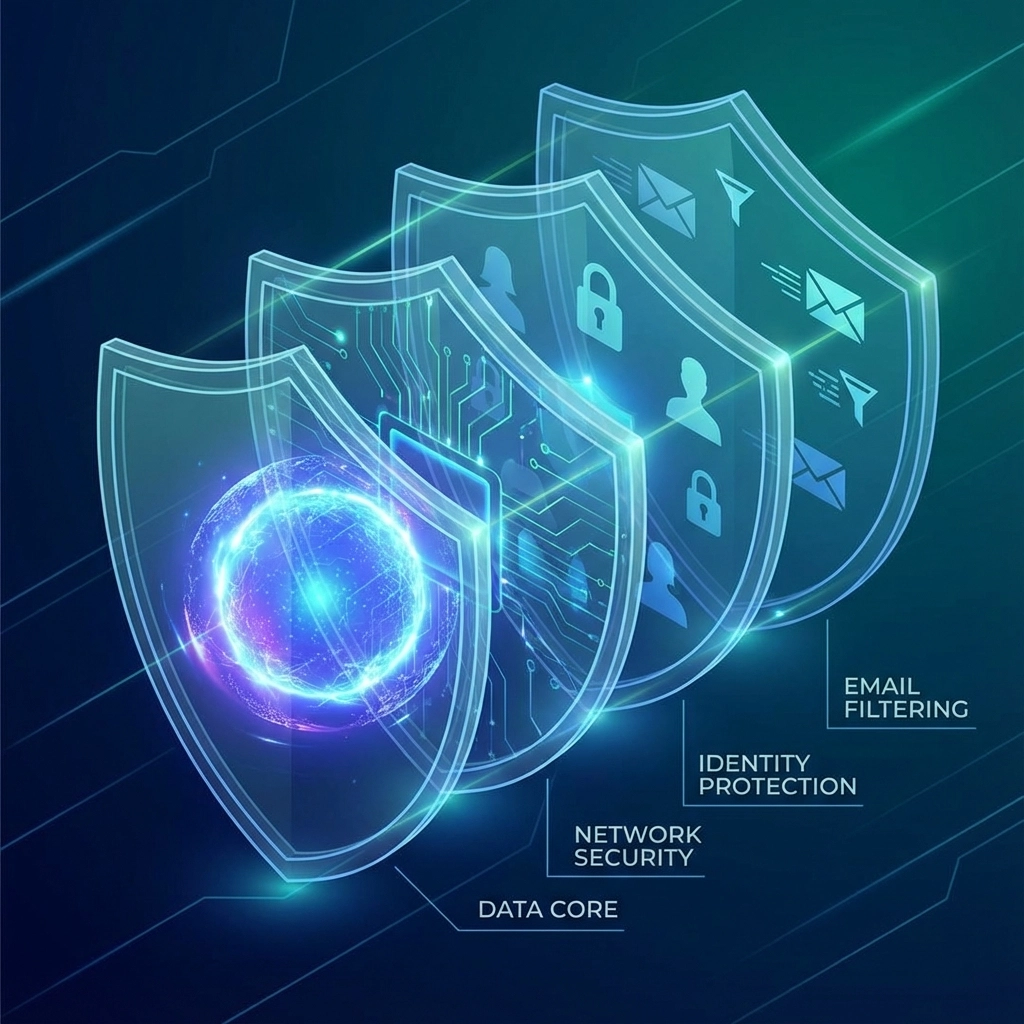
Essential Security Layers
Identity and access management controls who can access your systems and data. This includes multi-factor authentication, password policies, and regular access reviews.
Network security monitors traffic between systems to identify suspicious communications or data transfers.
Email security filters malicious messages and provides additional protection against phishing attempts.
Backup and recovery ensures that critical data remains available even if primary systems are compromised.
Security awareness training helps employees recognize and respond appropriately to social engineering attempts.
Incident response planning establishes clear procedures for containing and recovering from security incidents.
The Integration Advantage
When these security layers work together, they provide visibility and protection that no single tool can achieve. For example, if a phishing email bypasses email filters, network monitoring can detect unusual outbound communications, while access controls can limit the damage from compromised credentials.
This integrated approach also provides the detailed information security teams need to investigate incidents, understand attack methods, and strengthen defenses against similar future threats.
For businesses evaluating their current security posture, it's worth considering how proactive security measures compare to reactive approaches, particularly given the increasing sophistication of modern threats.
Making Security Practical for Your Business
The goal of modern cybersecurity is not to achieve perfect protection: it's to make your business a less attractive target while ensuring you can respond effectively when incidents occur.
This means focusing on the security measures that provide the greatest protection for your specific business needs and risk profile. A small law firm faces different threats than a manufacturing company, and their security approaches should reflect those differences.
The key is understanding that antivirus, whether traditional or next-generation, is one important component of a comprehensive security strategy, not a complete solution by itself.
Effective security also requires ongoing attention. Threats continue to evolve, and security measures must be regularly reviewed and updated to remain effective.
Moving Forward with Confidence
Understanding the limitations of antivirus software is not meant to create alarm, but to provide clarity about what effective cybersecurity requires in today's environment.
Many businesses successfully operate in this threat landscape by implementing appropriate security measures and maintaining good security practices. The key is recognizing that cybersecurity, like other aspects of business operations, requires thoughtful planning and ongoing attention.
If you're evaluating your current security approach and wondering what additional protections might benefit your business, we're here to help you understand your options and make informed decisions that support your business goals.
Comments